
Understanding THC Potency: What the Percentages on Dabwood Labels Actually Mean
A 35% THC disposable and a 90% THC liquid diamond device aren’t as simple to compare as the numbers suggest. Here’s how potency actually works.

THC percentage is the single number most buyers look at first — and the one most widely misunderstood. It’s not a simple “bigger number equals stronger effect” scale, and understanding what’s actually being measured helps you make smarter choices across our full product range, from Starter Kits through to DAB BAR 2.0.
What THC Percentage Actually Measures
THC percentage refers to the proportion of the product’s total weight or volume that consists of THC (tetrahydrocannabinol), the primary psychoactive cannabinoid in cannabis. It’s measured through laboratory chromatography testing and represents concentration, not a direct measure of “strength” in the way you might assume.
Why Two Products With Different Percentages Can Feel Similar
The dose you actually consume matters as much as the concentration. A single small draw from a 90% THC device may deliver a similar total amount of THC as a larger draw from a 35% product — concentration determines potency per unit volume, but the amount you inhale determines total dose. This is why “start low, go slow” (covered in our beginner’s guide) applies regardless of which potency tier you’re using.
Distillate vs Liquid Diamond Potency
Our standard distillate-based products (Dabwoods Disposables, Dabwoods Carts) typically test in a strong but moderate range, while our liquid diamond DAB BAR 2.0 line tests significantly higher due to the crystallised, near-pure starting material used in that formulation — see our full DAB BAR 2.0 review for more on how that extraction process works. Neither is objectively “better” — they simply sit at different points on the potency spectrum.
How THC Percentage Is Actually Tested
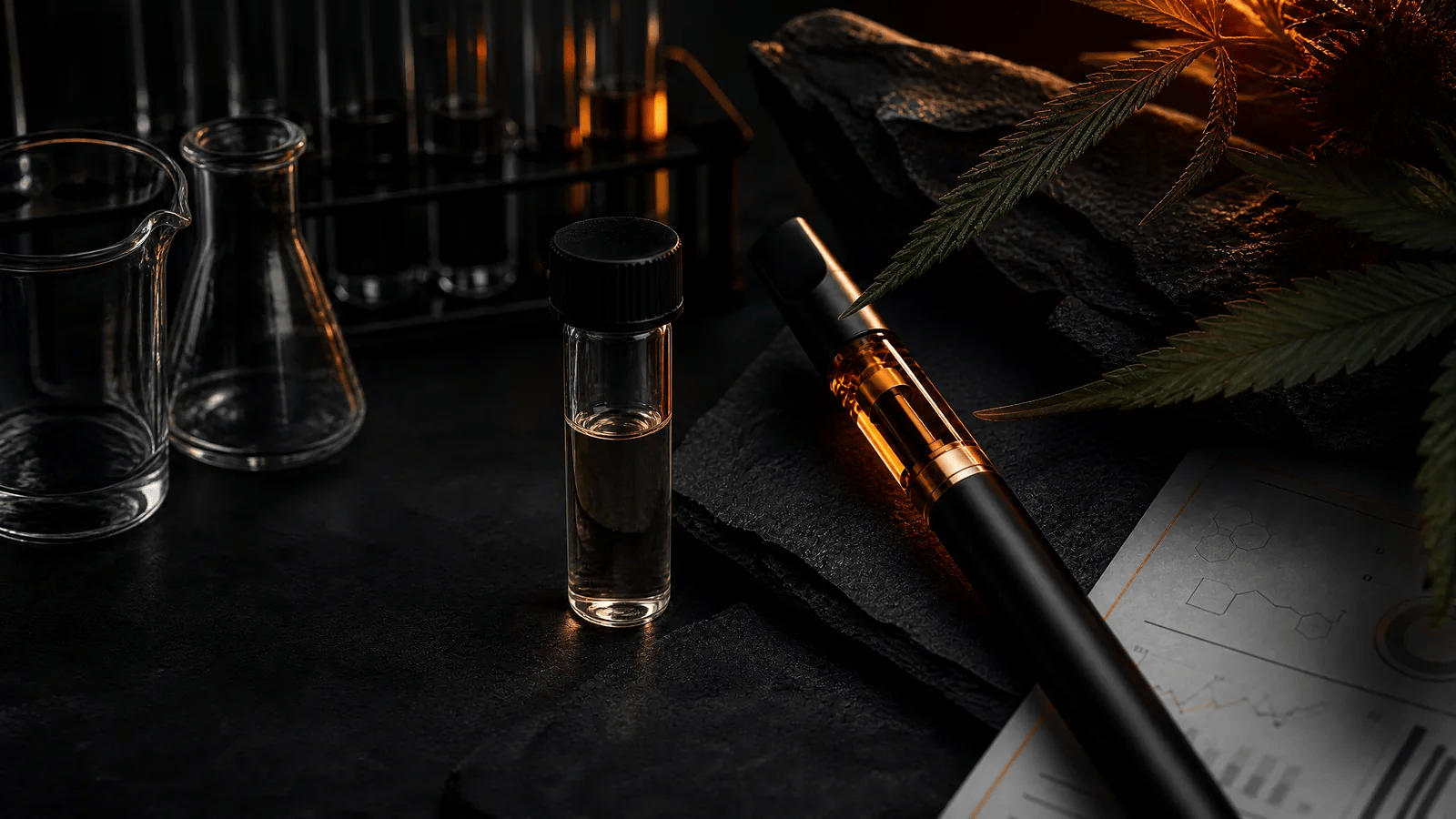
Independent labs use high-performance liquid chromatography (HPLC) to separate and quantify individual cannabinoids present in a sample. This method is precise enough to distinguish between THC, THCA (the non-psychoactive precursor to THC), CBD, and minor cannabinoids, providing a full cannabinoid breakdown rather than a single blended number. Full results — including breakdown by individual cannabinoid — are published for every batch on our Lab Results page.
THC vs THCA: An Important Distinction
Raw cannabis primarily contains THCA, which converts to active THC through a heating process called decarboxylation — this happens automatically when a vape device heats the oil during use. Some lab reports separate “Total THC” (accounting for this conversion) from raw, unconverted THCA. If you’re comparing potency figures between different products or brands, check whether they’re reporting Total THC or a different measurement basis, as this can create confusion when the numbers don’t seem to add up.
Factors That Affect How Potency Feels, Beyond the Percentage
- Individual tolerance. Regular users typically require higher doses to achieve the same effect as occasional users.
- Terpene profile. The “entourage effect” theory suggests terpenes may influence how THC’s effects are experienced, independent of raw percentage.
- Draw size and duration. A longer, deeper draw delivers more total product regardless of concentration.
- Body weight and metabolism. These affect how quickly and intensely cannabinoids are processed.
Why We Publish Exact Percentages, Not Ranges
Many vape products on the market list broad potency ranges (“70-90% THC”) rather than exact, batch-specific figures. We publish precise, batch-specific results because vague ranges make it impossible to know what you’re actually consuming. Each batch number corresponds to one specific, published COA with an exact tested percentage — not an estimate.
Comparing Potency Across Our Product Lines
| Product Line | Extraction Type | Typical Potency Range |
|---|---|---|
| Starter Kits | Distillate | Moderate — beginner-friendly |
| Dabwoods Disposables / Carts | Distillate | Strong, standard range |
| Terpwoods | Live Resin | Moderate-high, terpene-forward |
| DAB BAR 2.0 | Liquid Diamond | Very high concentration |
Frequently Asked Questions
Is a higher THC percentage always a “better” product?
Not necessarily — it depends on what you’re looking for. Flavour, terpene profile, and format matter just as much as raw potency for most users’ overall experience.
Why do two products with the same percentage feel different?
Terpene profile, individual tolerance, and draw technique all influence perceived effect independent of the raw THC number.
Can I trust the percentage listed if I don’t see the actual COA?
You should always be able to trace a percentage claim back to a specific, published, third-party COA. If you can’t, treat the claim with scepticism.
The Science Behind Cannabinoid Chromatography
High-performance liquid chromatography works by dissolving a sample in a solvent and passing it through a specialised column under high pressure, where different compounds separate based on their distinct chemical properties as they interact differently with the column material. Each separated compound is then detected and quantified individually as it exits the column, producing a precise breakdown of exactly which cannabinoids are present and in what concentration. This method is considered a gold standard for cannabinoid analysis precisely because of its precision and reliability compared to less rigorous testing approaches sometimes used in less regulated markets.
Why Potency Testing Sometimes Shows Slight Batch Variation
Even within a carefully controlled production process, minor potency variation between batches of the same named product is normal and expected — plant-derived starting material, even when sourced consistently, carries some inherent natural variation batch to batch. This is exactly why we publish batch-specific results rather than a single blanket potency claim for an entire product line indefinitely; the number you see reflects that specific batch, not a generic marketing estimate applied across every unit ever produced under that name.
How Potency Relates to Price Across the Industry
Higher-potency, more concentrated formulations like liquid diamond generally command higher prices, reflecting both the more complex production process involved and market demand for maximum-strength options among experienced users. This pricing pattern holds fairly consistently across the legal cannabis vape industry, not just within our own product range — it’s a reasonably reliable signal when comparing products from different brands, though it should never substitute for checking actual published lab results.
Comparing Potency Claims Across Different Brands
One challenge when shopping across multiple vape brands is that potency testing methodology and reporting standards aren’t perfectly uniform industry-wide, even though most reputable brands follow broadly similar chromatography-based approaches. When comparing a potency claim from one brand against another, check whether both are reporting “Total THC” on the same calculation basis, since inconsistent reporting methods can make two products look meaningfully different in potency when they’re actually closer than the raw percentages suggest.
The Role of Minor Cannabinoids
Beyond THC, cannabis contains dozens of minor cannabinoids — CBG, CBN, CBC, and others — each present in much smaller concentrations but potentially contributing to the overall effect profile alongside THC and terpenes. Comprehensive lab testing, like what we publish for every batch, includes these minor cannabinoids where detected, giving a fuller picture of a product’s complete chemical profile rather than reducing everything to a single headline THC number.
Practical Advice for Choosing Based on Potency
Rather than simply picking the highest available percentage, consider matching potency to your actual use case. Social or daytime use might call for a more moderate option that keeps you clear-headed, while an evening wind-down might suit a higher-potency product taken in a smaller dose. Our Starter Kits sit at the more approachable end of our potency range, while DAB BAR 2.0 sits at the higher end for users who specifically want maximum concentration.
How Regulatory Bodies Define Potency Reporting Standards
In jurisdictions with mature legal cannabis frameworks, regulatory bodies often define specific technical standards for how potency must be calculated and reported, including precise definitions of “Total THC” that account for the decarboxylation conversion factor between THCA and active THC. Where such standards exist, compliant testing and reporting must follow them precisely — this is part of why the calculation methodology, not just the final percentage, matters when evaluating how rigorous a brand’s potency claims actually are.
Why Some Users Prefer Lower-Potency Products Even With Experience
It’s a common assumption that experienced users always gravitate toward the highest available potency, but many experienced vapers specifically prefer moderate-potency products for everyday use, reserving higher-potency options for specific occasions. This reflects a genuine, valid preference for a more functional, moderate experience during regular use rather than maximum intensity every time — potency preference isn’t a linear progression tied purely to experience level.
The Relationship Between Potency and Flavour Intensity
Higher cannabinoid concentration doesn’t automatically correlate with more intense flavour — in fact, very high-purity formulations sometimes require more deliberate terpene reintroduction specifically because the crystallised or heavily refined starting material has less inherent flavour of its own. This is why product lines like Terpwoods, which prioritise live resin’s naturally preserved terpene complexity over maximum cannabinoid concentration, can offer a more flavour-forward experience despite not topping the potency charts within our catalogue.
Practical Steps for Tracking Your Own Potency Preferences
If you’re trying to dial in your ideal potency level across multiple purchases, keeping informal notes on which specific products and batch numbers you’ve tried, along with your subjective experience of each, can help you make more informed choices over time rather than relying purely on memory. Since every batch’s exact potency is published on our Lab Results page, you have the reference data available to make this kind of tracking genuinely useful rather than guesswork.
Bringing It All Together When You Shop
The next time you’re browsing our catalogue, use potency as one factor among several — alongside format, extraction method, and terpene profile — rather than the single deciding factor. A product’s full picture, visible on its listing and cross-referenced against our published lab results, tells you far more about whether it’s right for you than the headline THC percentage alone ever could.
Staying Informed as Testing Standards Evolve
Cannabis testing science and regulatory standards continue to develop as the broader legal industry matures globally. We periodically review and update our own testing panels and reporting practices to stay aligned with evolving best practices, and we encourage returning customers to occasionally revisit our Lab Results page even for products they’ve purchased before, since methodology refinements can occasionally affect how results are presented.
Putting Potency in Perspective
At the end of the day, THC percentage is one useful data point among several — format, extraction method, terpene profile, and your own personal tolerance all combine to determine your actual experience with any given product. Treating potency as the single most important factor, to the exclusion of everything else covered in this guide, is a common but ultimately limiting way to approach choosing a vape product.
Where to Check Potency Before Your Next Purchase
Before your next order, take a moment to check the specific batch’s published results on our Lab Results page rather than relying purely on the general potency range listed on the product page. This small habit ensures you always have the most accurate, batch-specific information available before deciding what to buy.
How This Understanding Changes Future Purchases
Armed with a clearer understanding of what potency percentages actually represent, future purchasing decisions become less about chasing the highest number and more about matching a product’s full profile — potency, extraction method, terpene character — to your specific goals for that particular purchase. This more nuanced approach consistently leads to better-matched purchases than potency-percentage shopping alone.
A Recap of the Key Takeaways
THC percentage measures concentration, not automatically “strength” of experience. Dose consumed matters as much as concentration tested. Different extraction methods (distillate, live resin, liquid diamond) produce different potency profiles for genuinely different reasons. And every claim we make about potency is backed by a specific, published, batch-traceable lab result you can verify directly rather than simply trusting our word.
Making Your Next Purchase With Confidence
You now have a genuinely deeper understanding of what THC potency percentages mean than the average vape shopper — use that knowledge to make your next purchase decision based on real understanding rather than simply chasing the biggest number on the label. That’s precisely the kind of informed decision-making we want every customer equipped to make.
How Potency Testing Has Improved Industry-Wide
Testing methodology and instrument precision for cannabinoid analysis have improved substantially over recent years as the broader legal cannabis testing industry has matured, generally producing more accurate and consistent results across accredited labs than was achievable in the industry’s earlier years. This ongoing improvement is part of why staying informed about current testing standards, rather than relying on older general knowledge about cannabis potency testing, matters for making genuinely well-informed purchasing decisions today.
Common Questions From Customers About Potency We Haven’t Covered Yet
Beyond the FAQ below, customers sometimes ask whether potency affects how long a product lasts before running out — it doesn’t directly, since that’s determined by total oil volume rather than concentration. Others ask whether higher-potency products degrade faster in storage — degradation rates are more closely tied to terpene volatility and storage conditions than to raw cannabinoid concentration, meaning our general storage guidance applies consistently regardless of which potency tier a specific product falls into.
Trusting Verified Data Over General Assumptions
Whenever possible, favour checking a product’s actual published lab result over relying on general assumptions about how potency “should” work based on percentage alone. This habit, more than any single fact covered in this guide, is what actually protects you as an informed consumer navigating a market where marketing claims and genuine, verified data don’t always align perfectly.
One Final Thought on Percentages and Perception
It’s worth remembering that the number on a label is a laboratory measurement, not a promise about exactly how you’ll feel. Your own body, tolerance, and the specific circumstances of any given session all interact with that measurement to produce your actual experience — which is ultimately why understanding the full context behind a potency percentage, as covered throughout this guide, serves you far better than fixating on the number in isolation.
Thanks for Taking the Time to Understand the Science
Most buyers never dig this deep into what potency percentages actually represent. Taking the time to understand it puts you in a stronger position to make genuinely informed choices — not just with us, but anywhere you shop for cannabis vape products going forward.
Knowledge That Serves You Long-Term
Unlike a single product recommendation that becomes outdated as our catalogue evolves, understanding how potency testing and reporting actually works is knowledge that will continue serving you for as long as you shop for cannabis vape products, regardless of which specific items you eventually choose to buy.
Shop With Real Understanding
You’re now equipped to read any potency claim — ours or any other brand’s — with genuine understanding rather than surface-level trust. That’s a meaningfully more powerful position to shop from.
Every batch, every percentage, independently verified and published.
Check Current Lab Results